
Choosing the Right Cladding: An Installer’s Honest Guide
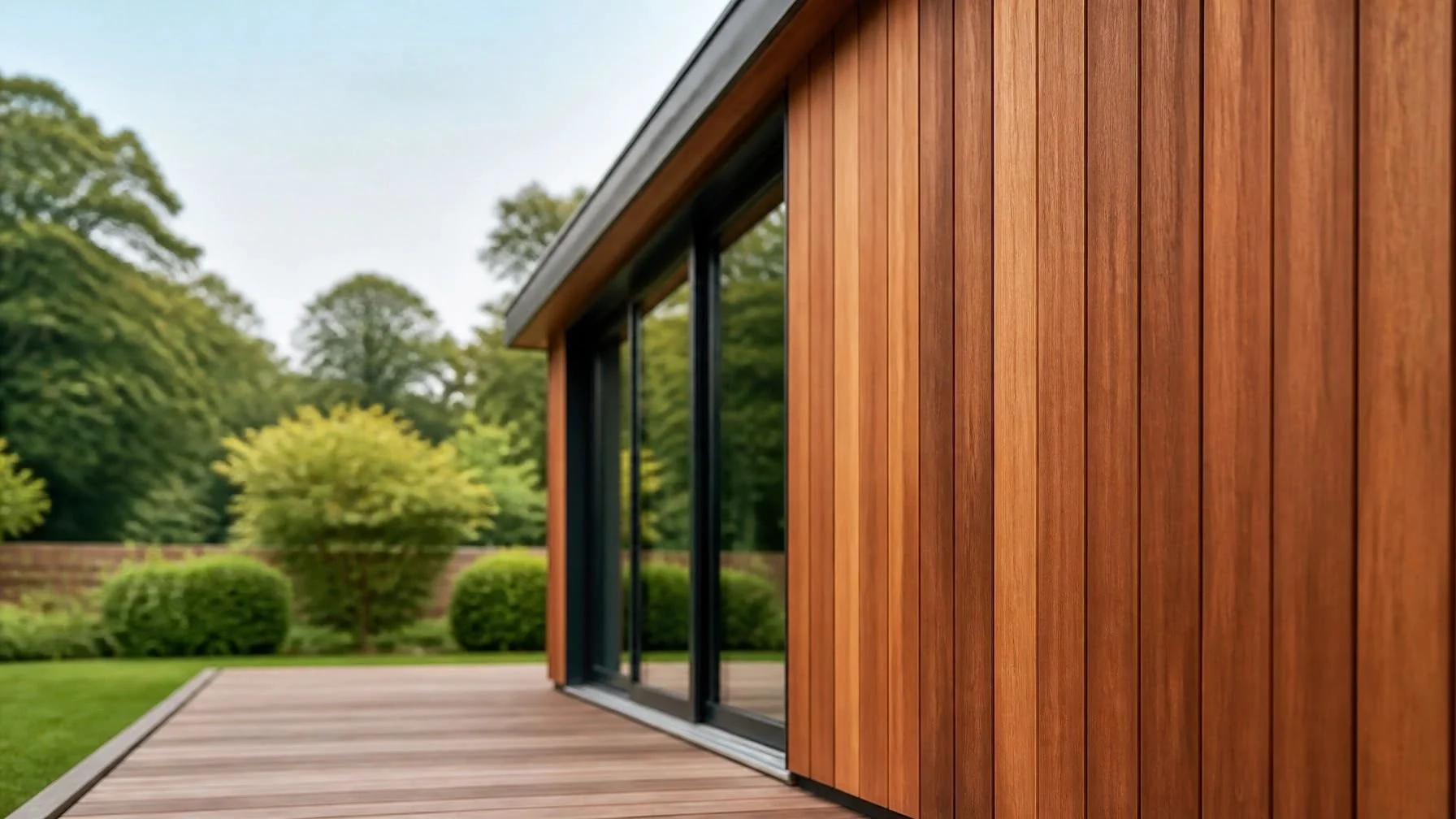
When you’re planning a garden room, it’s easy to get swept away by the "Pinterest-perfect" interiors: the bi-fold doors, the sleek flooring, and the smart lighting. But as installers who have spent years out in the elements across Buckinghamshire and the South East, we know that the real hero (or villain) of your project is the cladding.
Choosing the right exterior finish isn’t just about the look; it’s about how that building will stand up to a damp British winter and a scorching (occasionally) summer. We get asked the same questions every week: "Will it fade?" "Do I need to paint it?" and "Which one is actually the best value?"
In this guide, we’re stripping away the sales fluff. We’ll give you the honest, installer’s take on the four most popular cladding options to help you decide what’s right for your garden, your budget, and your lifestyle.
Why Your Cladding Choice Matters More Than You Think
Is your garden room going to be a high-traffic garden room home office, or a tranquil wellness room? The way you use the space: and how much time you want to spend maintaining it: dictates your choice.
Cladding is your building's first line of defence. It handles the rain, the UV rays, and the odd stray football. From an installer's perspective, we look for stability, durability, and how the material "behaves" over time.

1. Western Red Cedar: The Gold Standard
If you’ve been browsing garden room ideas, you’ve definitely seen Western Red Cedar. It’s the "Rolls Royce" of timber cladding, and for good reason.
The Installer’s Take:
Cedar is a joy to work with. It’s lightweight, incredibly stable, and naturally resistant to rot and insect attack thanks to the organic oils within the wood. From a technical standpoint, it has very little "movement," meaning it won't warp or twist as much as cheaper softwoods once it’s on your wall.
The Pros: It looks stunning. The variation in colour: from deep chocolate browns to light pinks: gives a premium, high-end finish that’s hard to beat. It also smells fantastic (though that’s a bonus for us during the build!).
The Cons: It is expensive. Because most high-quality cedar is imported from Canada, prices can be volatile. Also, because it’s a soft wood, it can bruise if it’s hit hard.
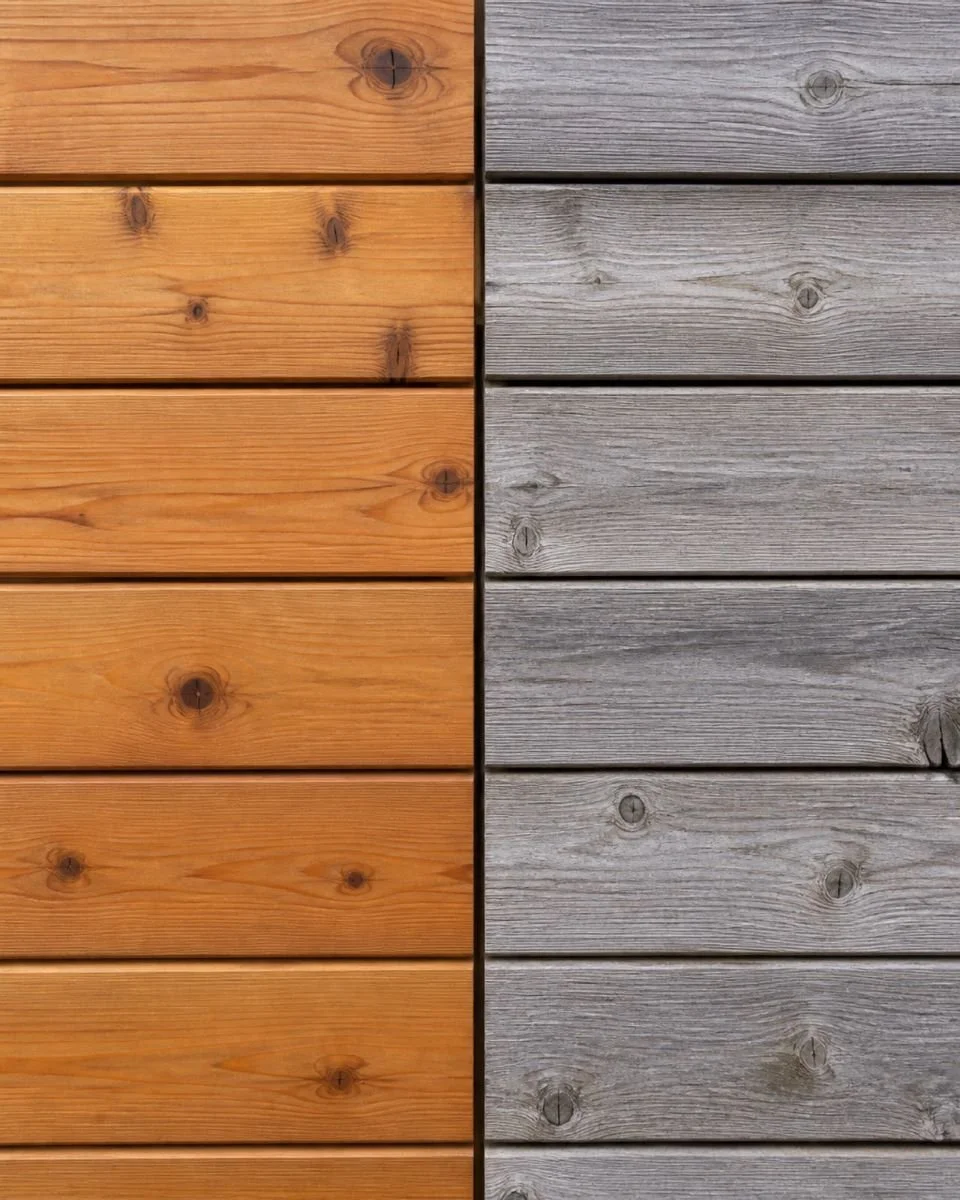
The Reality Check: Many people buy Cedar for its warm reddish glow. However, without regular UV protection, it will turn a silvery-grey within 12 to 18 months. We love the silver look, but if you don't, be prepared for some maintenance.
2. Larch: The Rugged Performer
Larch is the tough, dense cousin of Cedar. If you’re looking for something that feels substantial and architectural, this is often our go-to recommendation.
The Installer’s Take:
Larch is significantly denser than Cedar. When we’re fixing it, we have to be more precise: pre-drilling is often a must to prevent the wood from splitting because it’s so hard. It’s a very "active" wood, meaning it can move a bit more than Cedar during the seasons, so the installation needs to be spot-on.
The Pros: It’s incredibly hard-wearing. If your garden room is in a spot where kids are likely to kick balls against it, Larch will stand up to the punishment better than Cedar. It’s also generally more budget-friendly than premium Cedar.
The Cons: It tends to have more knots, which gives it a more "rustic" or "Scandi" look. If you want a perfectly clear, grain-only look, Larch might not be for you.
The Reality Check: Like all natural timbers, Larch will silver over time. Because of its density, it doesn't take stains quite as deeply as softer woods, so the natural weathering process is often the best way to let it age gracefully.
3. Composite Cladding: The Modern Minimalist
Not everyone wants to spend their bank holidays with a paintbrush in hand. That’s where composite cladding comes in. Made from a mix of wood fibres and plastic, it’s designed to give the appearance of wood without the upkeep.
The Installer’s Take:
Composite is an "engineered system." It’s consistent: every board is the same colour and the same length, which allows for a very clean, modern finish. We use high-quality brands that won't warp or fade, but the installation requires a specific set of trims and expansion gaps because composite expands and contracts with heat differently than wood does.
The Pros: Zero maintenance. You won't need to oil it, stain it, or worry about rot. It’s available in a huge range of colours, from slate grey to "antique" oak, and the colour you see on day one is the colour you’ll have in ten years.
The Cons: The upfront cost is higher than some mid-range timbers. Also, while the texture is great, some purists feel it lacks the "soul" and unique character of real, natural wood.
The Reality Check: If you want a garden room pool room or a gym where you just want to "plug and play" without worrying about exterior upkeep, composite is the winner every time.
4. Thermowood & Treated Redwood: The Practical Choice
If you’re keeping a close eye on pricing, Thermowood is a fantastic mid-point. It’s usually Scandinavian Pine that has been heat-treated to over 200 degrees.
The Installer’s Take:
The heat treatment process actually changes the chemical structure of the wood, making it much more stable and durable than standard "off-the-shelf" treated timber. It’s a great "workhorse" material.
The Pros: Very stable and much cheaper than Cedar or Larch. The heat treatment gives it a nice, consistent chocolate-brown colour throughout the board.
The Cons: It can be a bit brittle during installation. From a longevity standpoint, it won't last quite as long as premium Cedar, and it requires regular staining if you want to keep it looking fresh.
The Reality Check: If you’re on a budget but want the warmth of real wood, Thermowood is a solid choice. Just don't neglect the maintenance, or it can start to look tired faster than its premium counterparts.
The "Silvering" Truth: Managing Your Expectations
One of the biggest surprises for homeowners is the "silvering" process. All natural timber cladding will eventually turn a silvery-grey due to UV exposure. This isn't a sign of rot; it’s a natural protective layer.
Some people love the "weathered look": it can look incredibly sophisticated and helps the building blend into the garden. However, if you want your building to stay looking like the day it was installed, you will need to apply a high-quality UV oil every 1–2 years (depending on how much sun your garden gets).
Installer Tip: If you have a north-facing wall and a south-facing wall, they will silver at different rates. This can look a bit patchy for a few months during the transition. If that's going to bother you, composite might be the better path!
Maintenance Realities: What Will You Actually Have to Do?
We believe in being honest about the "aftercare." Here is what your maintenance schedule looks like for each:
Composite: An annual wash with soapy water and a soft brush to remove any bird droppings or cobwebs. That’s it.
Cedar/Larch (The Silver Look): Practically nothing, though a quick wash once a year keeps it looking clean.
Cedar/Larch (The "New" Look): Re-oiling every 18–24 months with a UV-protectant clear oil.
Thermowood: Regular staining or painting every 2–3 years to keep the moisture out and the colour in.
Which One is Right for You?
Choosing your cladding is a balance of Aesthetics, Budget, and Maintenance.
Go for Cedar if you want the absolute best and don't mind the premium price or the upkeep to keep it red.
Go for Larch if you want a tough, "industrial-chic" look that can handle a bit of rough and tumble.
Go for Composite if you want a modern, "set and forget" building that stays looking brand new forever.
Go for Thermowood if you want the beauty of real wood while keeping the project costs sensible.
See Them for Yourself
Photos are great, but there is no substitute for seeing these materials in person. You need to feel the texture of the grain and see how the light hits the different shades of grey in the composite boards.
We invite you to visit our local showrooms in Buckinghamshire. We have large-scale samples of all our cladding options so you can walk around them, touch them, and get a real sense of how they’ll look in your garden.
Ready to start your project? Get in touch with our team today for a chat about your vision!