
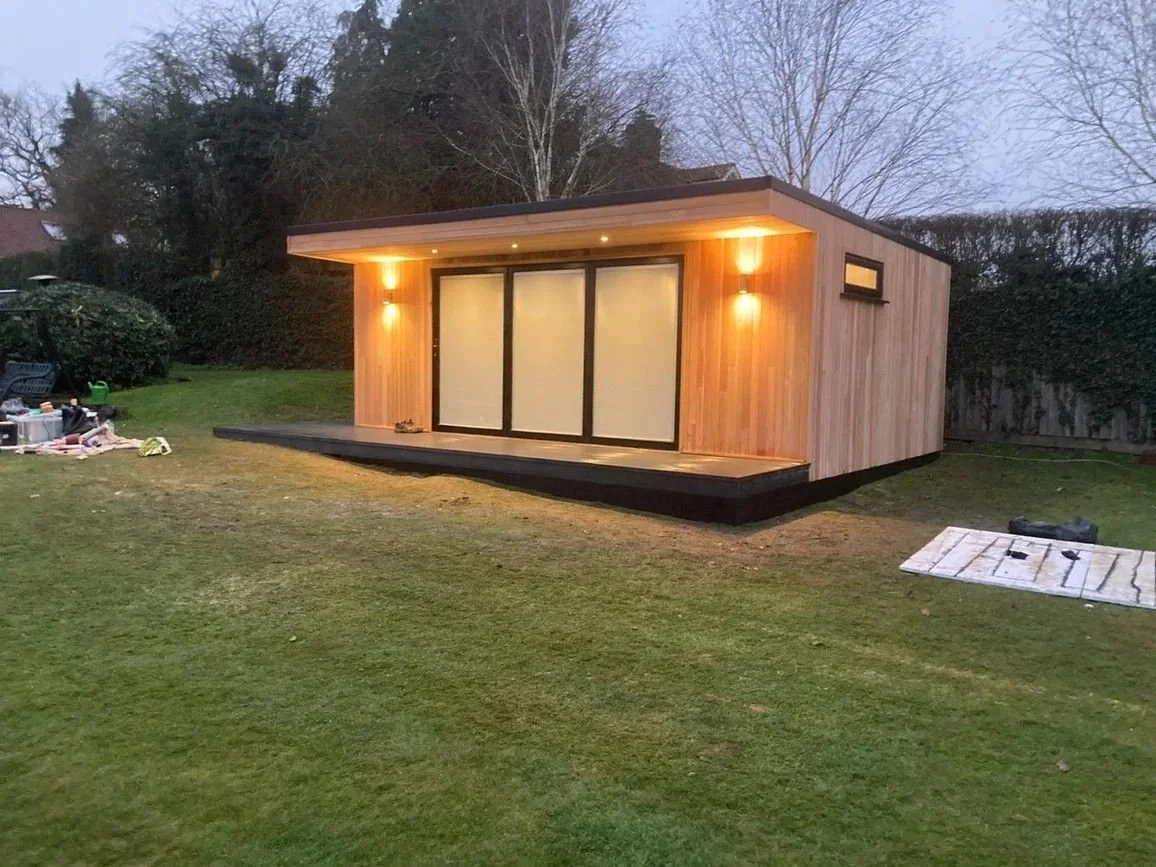
Will a garden room really be comfortable to use in January? Yes, if it’s designed and built for year-round use. A properly insulated room with suitable glazing, heating and careful construction can be warm, dry and welcoming through winter. A building without those essentials may be cold and uncomfortable, so it’s worth checking exactly what’s included before you buy.
What helps a garden room stay warm in winter?
Warmth depends on the whole building, not just the wall insulation. Heat can escape through the floor, ceiling, windows, doors and gaps around the structure. A good design considers all of these, then adds heating to suit the way you’ll use the room.
Workmanship matters too. Gaps and poorly joined materials can create thermal bridges: spots where heat escapes more easily because the insulation is interrupted. Ask how the walls, floor, roof, windows and doors fit together, rather than judging a room on one specification alone.
What insulation should you look for?
Ask for the insulation depth in each part of the room. General claims such as “fully insulated” don’t tell you how much insulation is in the walls, ceiling or floor.
Our garden rooms include:
100mm of insulation in the walls
150mm of insulation in the ceiling
100mm of insulation in the floor
The ceiling and floor matter as much as the walls: warm air rises, while an uninsulated floor can feel cold underfoot. You can see more about our garden room specification and what’s included on our pricing page.
Does glazing make a difference?
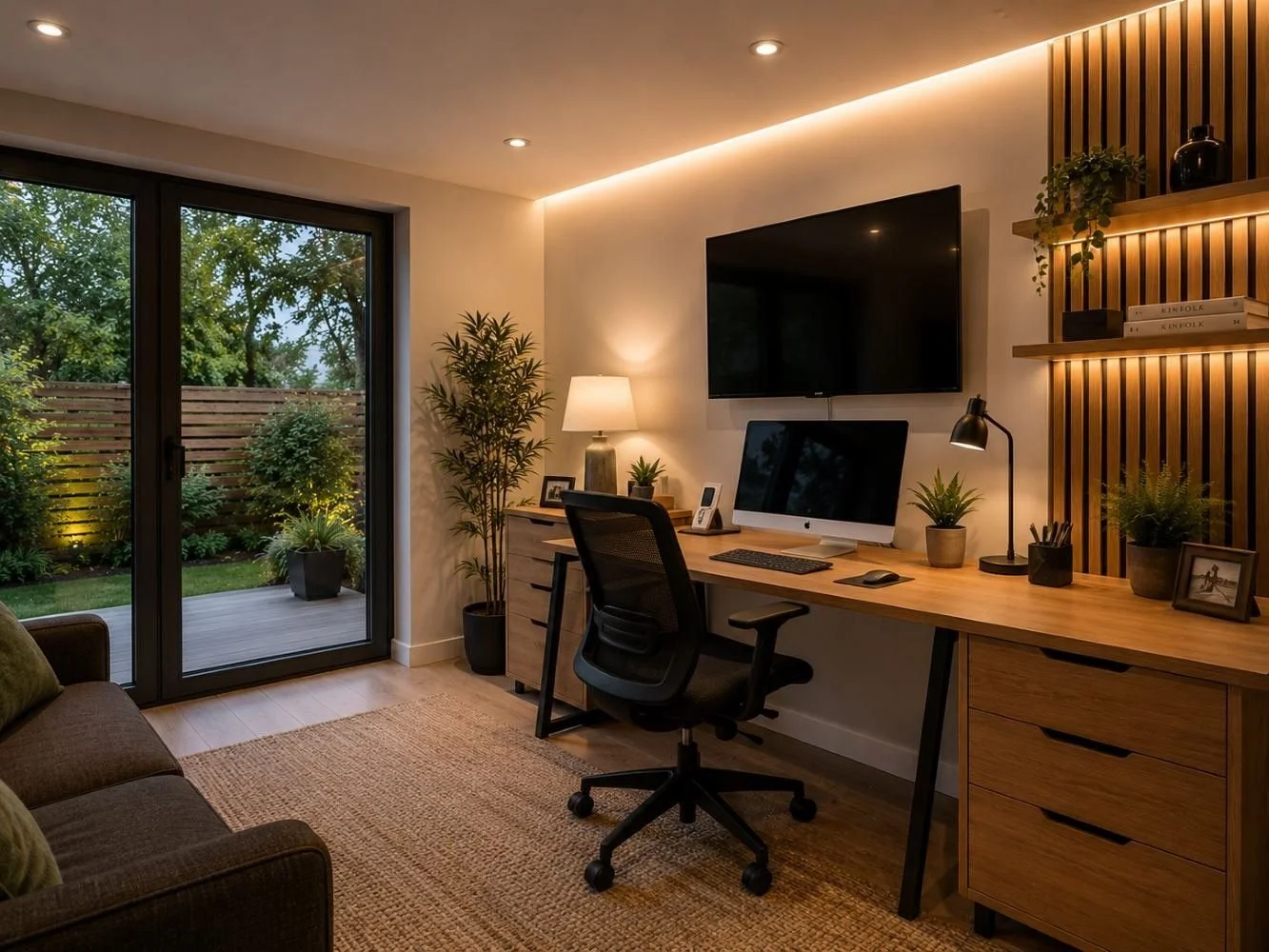
Yes. Windows and doors bring in useful daylight, but glass can also be a route for heat loss. The type of glazing, the frame and how well everything is fitted all make a difference.
Our rooms have double glazing with Pilkington K glass. This low-emissivity glass is designed to help reduce heat transfer while letting natural light into the room. Think about where your glazing will face, too. A bright, sunny position may bring welcome warmth, but you may want shading to manage glare and heat on sunnier days.
What heating and cooling options are available?
Even a well-insulated room will usually need heating when it’s cold outside. Our standard specification includes a wall-mounted electric heater. You can also choose optional integrated heating and cooling if you’ll use the room regularly as a home office, studio or gym and want to manage the temperature throughout the year.
When comparing options, ask how the system is controlled. A thermostat helps maintain your chosen temperature, while a timer can be useful if you want the room warm for a particular part of the day. Your best choice depends on the room’s size, how often you’ll use it and the way you like to work or relax.
How can you reduce condensation and damp?
Moisture comes from everyday activities, including breathing, exercise and drying damp clothes. If humid air stays in a cold room, condensation can form on cooler surfaces. Good ventilation helps let that moisture out, while steady heating can make the space more comfortable.
Open a window briefly when the room feels stuffy or after a workout, and avoid blocking ventilation. Check that windows and doors close properly and that the roof is kept in good condition. Our rooms have a rubber membrane roof with a 20-year guarantee and ground screw foundations with a 25-year guarantee. The floor is raised above ground level, which helps keep the building’s structure clear of direct ground contact.
We also offer an optional annual health check for £450 + VAT, covering the roof, windows and cedar re-oiling.
What can you use a garden room for all year round?
A comfortable, heated garden room can support all kinds of everyday uses: a focused office, a creative studio, a home gym, a family media room or a quiet place to unwind. For inspiration, explore our garden room ideas, including our home gym and wellness room options.
Planning permission and building regulations are separate matters, and the rules depend on factors such as the building’s size, position and intended use. Larger buildings and rooms intended for sleeping accommodation need particular care. Check the Planning Portal’s outbuilding planning guidance and building regulations guidance, and speak to your local authority if you’re unsure.
What should you ask a garden room supplier?
Before choosing a supplier, ask for clear answers to these questions:
How much insulation is in the walls, floor and ceiling? Ask for the actual depths, not just a general claim.
What glazing is included? Find out the glass type and how the windows and doors are fitted.
How is the roof constructed? Ask about the roof finish, its guarantee and the maintenance it needs.
What foundation system is used? Make sure you understand what’s included and what guarantee applies.
What comes as standard, and what costs extra? Compare the full specification, including heating and cooling.
What warranties and aftercare are offered? Check what each guarantee covers.
Can you visit a finished room? Seeing a room in person can help you judge the materials, finish and feel of the space.
We’ve installed more than 650 rooms. Our buildings use Canadian Western Red Cedar cladding, are EPC ‘A’ rated and come with a 10-year structural warranty. You can browse our completed garden room gallery and read about our design and build process.
What affects running costs and everyday comfort?
A well-insulated room holds onto heat more effectively, so its heater doesn’t have to work as hard as it would in a poorly insulated building. That’s why it’s sensible to compare the insulation and glazing before focusing on heater size. Your running costs will also depend on the room’s size, your preferred temperature, how often you use it and your electricity tariff.
Comfort is more than temperature. A room that feels quiet, dry and draught-free, with a warm floor and good natural light, is easier to enjoy through the colder months. If you’re planning a project, our guide to garden room costs can help you explore the wider decisions involved.
Frequently asked questions
Are garden rooms warm in winter?
A garden room designed for year-round use can be warm and comfortable in winter. Check that insulation is specified for the walls, floor and ceiling, and that suitable glazing and heating are included.
How much insulation does a garden room need?
There isn’t one figure that suits every design, so ask for the actual insulation depths across the whole room. Our specification is 100mm in the walls, 150mm in the ceiling and 100mm in the floor.
Do insulated garden rooms need heating?
Usually, yes, if you want a comfortable temperature in winter. Our standard room includes a wall-mounted electric heater, with integrated heating and cooling available as an option.
Will an insulated garden room get damp or condensation?
Good insulation, suitable ventilation and regular care help manage the risk, but no building is immune to moisture. Ventilate the room when needed and investigate persistent condensation or signs of water ingress.
Can I use my garden room as a year-round office?
Yes, a well-insulated room with suitable heating and lighting can make a practical home office throughout the year. Consider where the windows face, how you’ll ventilate the room and what temperature you prefer while working.
See the specification for yourself
If you’re considering an all-year-round garden room, you’re welcome to compare the specification and ask us about your plans. Our showrooms in Great Missenden, Henley-on-Thames and Ruislip are open by appointment. Find out more about our showrooms, or get in touch to arrange a visit or free consultation.
Call 01494 702 199 or email contactform@bgr.group.